

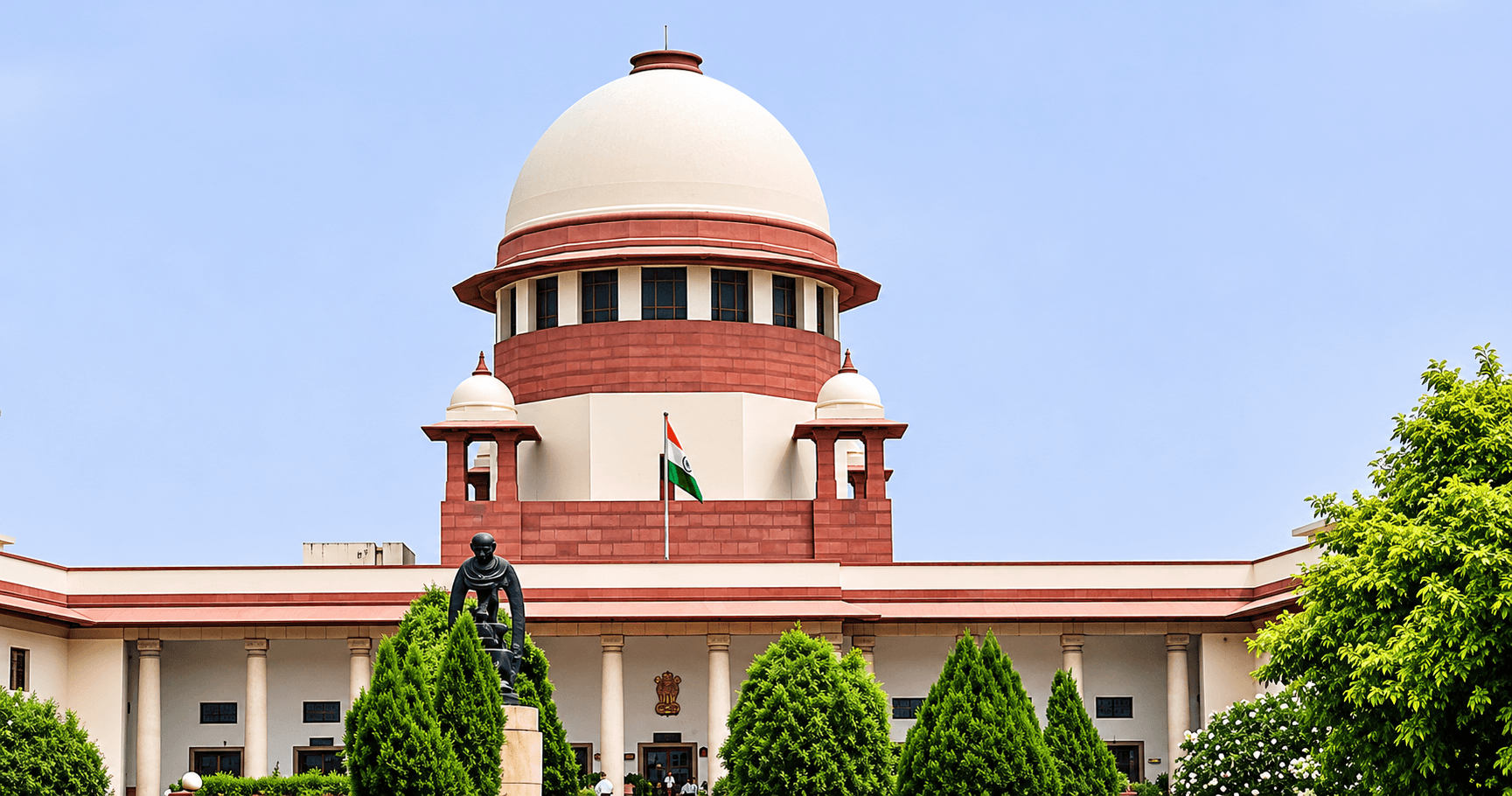
The Supreme Court of India has delivered an important ruling on foreign divorce decrees, making it clear that decisions by overseas courts must meet Indian legal requirements before they can be recognised in the country.
In its judgment dated 3 November 2026, in N. Sridhar Reddy v. State of Andhra Pradesh and Others, the Court declined to accept a UK divorce decree as grounds for allowing a husband to avoid prosecution for bigamy under Indian law.
A Bench comprising Justice Prashant Kumar Mishra and Justice Shree Chandrashekhar held that a divorce granted abroad on the ground of irretrievable breakdown of marriage could not automatically dissolve a marriage solemnised under Hindu rites in India when that ground was not recognised under the Hindu Marriage Act, 1955.
The judgment underlines a crucial point: obtaining a divorce in another country does not necessarily bring an Indian marriage to an end under Indian law. It also highlights the importance of jurisdiction, compatibility with Indian law and procedural fairness when courts consider foreign matrimonial judgments.
THE CASE BEHIND THE SUPREME COURT'S RULING
The case dates back to 18 April 2003, when the man married his first wife according to Hindu rites and ceremonies in Sattenapalli, Andhra Pradesh.
He moved to the United Kingdom in 2005, and his wife joined him a year later. However, their relationship eventually broke down, prompting the wife to return to India in 2007.
The husband initially approached Indian courts seeking a divorce, but his efforts were unsuccessful. He later withdrew his appeal before the Andhra Pradesh High Court.
After acquiring British citizenship in February 2013, he started fresh divorce proceedings before the Cambridge County Court in the UK.
The British court granted him a divorce on the ground of irretrievable breakdown of marriage. The decree became absolute on 29 January 2014.
He subsequently married another woman in Norfolk, England, on 3 March 2014. Following the second marriage, his first wife filed a criminal complaint in India, accusing him of bigamy and conspiracy.
The matter eventually reached the Supreme Court after the Andhra Pradesh High Court refused to quash the criminal proceedings against him.
WHY THE FOREIGN DIVORCE DECREE WAS REJECTED
The central question before the Supreme Court was whether the UK divorce decree could be recognised in India under Section 13 of the Code of Civil Procedure (CPC).
The Court found that the decree did not meet the necessary legal requirements. The British court had granted the divorce on the ground of irretrievable breakdown of marriage, which was not a recognised statutory ground for divorce under the Hindu Marriage Act applicable to the couple.
The judges made it clear that a foreign court's decision cannot automatically take precedence over Indian matrimonial law simply because the divorce was granted overseas.
To support its reasoning, the Court referred to the landmark judgment in Y. Narasimha Rao v. Y. Venkata Lakshmi (1991). That decision established important principles governing the recognition of foreign matrimonial judgments in India.
The Bench also considered its 2026 decision in Kishorekumar Mohan Kale v. Kashmira Kale, which similarly dealt with the recognition of foreign divorce decrees based on grounds not recognised under the relevant Indian matrimonial law.
The latest ruling reinforces the need for foreign matrimonial judgments to satisfy Section 13 CPC, including requirements relating to jurisdiction, the merits of the case and natural justice.
CHANGE OF NATIONALITY DOES NOT ERASE AN EXISTING INDIAN MARRIAGE
Another important issue was whether the husband's decision to acquire British citizenship could protect him from prosecution under Indian bigamy laws.
The husband argued that he had become a British citizen before his second marriage and that the marriage itself had taken place in the UK. On this basis, he challenged the applicability of Indian criminal law.
The Supreme Court rejected this argument.
It noted that his first marriage had taken place in India under Hindu customs and that the legal consequences of that marriage could not simply be avoided by changing nationality.
The Court emphasised that the bigamy allegation had to be considered in light of the legal status of the first marriage. The fact that the second marriage took place outside India was not, by itself, enough to settle the question of criminal liability.
The decision sends a clear message that acquiring foreign citizenship does not automatically remove legal obligations arising from an existing Indian marriage.
BIGAMY PROCEEDINGS TO CONTINUE AGAINST THE HUSBAND
The Supreme Court refused to interfere with the criminal case against the husband under Section 494 of the Indian Penal Code, which deals with marrying again during the lifetime of a spouse when the second marriage is legally void on that account.
The Court held that the UK divorce decree could not be used as a shield to stop the prosecution from proceeding.
However, the Bench made a distinction between the husband and the other accused persons.
It quashed the criminal proceedings against his parents and his second wife but allowed the case against the husband to continue.
This is an important aspect of the judgment. It shows that criminal responsibility must be assessed individually rather than automatically extending allegations to everyone named in a matrimonial dispute.
Importantly, the Supreme Court has not convicted the husband of bigamy. It has only allowed the criminal proceedings against him to continue in accordance with the law.
SECTION 13 CPC: WHY FOREIGN JUDGMENTS MUST MEET INDIAN LEGAL STANDARDS
Section 13 of the Code of Civil Procedure lays down the conditions under which foreign judgments can be recognised in India.
A foreign judgment may not be considered conclusive if it was delivered by a court without competent jurisdiction, was not decided on the merits or involved an incorrect understanding of international law or a refusal to recognise applicable Indian law.
The provision also covers situations involving violations of natural justice, fraud and claims founded on breaches of Indian law.
These safeguards are particularly important in matrimonial disputes because divorce changes a person's legal marital status and affects the rights and responsibilities of both spouses.
Through its latest ruling, the Supreme Court has reiterated that Indian courts must examine the legal basis of an overseas divorce instead of accepting the decree at face value.
It also highlights why both parties must have a fair opportunity to participate in foreign legal proceedings.
A SIGNIFICANT MESSAGE FOR INDIANS LIVING ABROAD
The judgment carries important implications for Indians living overseas, particularly those who marry under Indian personal laws and later seek divorce in another country.
Many Indians residing in the UK, United States, Canada and Australia approach local courts for matrimonial relief. However, a divorce granted under foreign law may not automatically be recognised in India.
Its recognition can depend on several factors, including whether the foreign court had proper jurisdiction, whether the proceedings followed principles of natural justice and whether the grounds for divorce are compatible with the applicable Indian matrimonial law.
This means that an overseas divorce may not, on its own, settle a person's marital status under Indian law.
The ruling also highlights the legal complications that can arise when someone enters another marriage without first ensuring that their previous marriage has been legally dissolved in a manner recognised by India.
For families, legal professionals and the Indian diaspora, the decision is a reminder to seek appropriate legal advice before relying on a foreign divorce decree for further matrimonial decisions.
RISKS AND KEY ISSUES TO WATCH
Recognition of foreign divorces: Overseas divorce decrees may face challenges if they do not meet the requirements of Indian law.
Cross-border marriages: Couples married under Indian personal laws may encounter complications when seeking divorce abroad.
Bigamy allegations: Entering a second marriage without a legally recognised dissolution of the first marriage can lead to criminal proceedings.
Change of citizenship: Acquiring foreign nationality does not automatically remove legal obligations arising from an existing Indian marriage.
Jurisdictional disputes: Indian courts will continue to examine whether foreign courts had the appropriate jurisdiction to decide matrimonial cases.
Individual criminal liability: The ruling highlights the importance of examining each accused person's specific role rather than assuming collective responsibility.
WHAT TO WATCH NEXT
Trial court proceedings: The next developments in the bigamy case against the husband following the Supreme Court's decision.
Recognition of foreign divorces: Whether the judgment influences future disputes involving divorce decrees from the UK and other countries.
Legal interpretation: How courts apply Section 13 CPC alongside principles established in earlier matrimonial judgments.
NRI matrimonial disputes: Whether the ruling encourages greater caution among Indians seeking divorce overseas.
Personal law debates: Whether the decision brings renewed attention to recognising irretrievable breakdown of marriage as a ground for divorce under Indian law.
Legal awareness: Whether further guidance emerges for Indians involved in cross-border matrimonial disputes.
FACT CHECK METER
Editorial confidence: 99%
Strongly supported — Supreme Court judgment dated 3 November 2026
CONFIRMED DETAILS
Case: N. Sridhar Reddy v. State of Andhra Pradesh and Others.
Judgment date: 3 November 2026, reported as 2026 INSC 1191.
Bench: Justices Prashant Kumar Mishra and Shree Chandrashekhar.
The UK divorce was granted on the ground of irretrievable breakdown of marriage.
Criminal proceedings against the husband were allowed to continue.
Proceedings against his parents and second wife were quashed.
IMPORTANT LEGAL DISTINCTIONS
The Court did not declare all foreign divorce decrees invalid.
Recognition depends on Section 13 CPC and the applicable matrimonial law.
The husband has not been convicted of bigamy; the criminal case is still proceeding.
The decision concerns the specific facts and legal circumstances of this case.
AWX VERDICT
The Supreme Court has reinforced a fundamental principle of Indian matrimonial law: a foreign divorce decree cannot automatically override the country's legal requirements.
By refusing to recognise the UK divorce decree in this particular case, the Court has strengthened the safeguards governing overseas matrimonial judgments and clarified the potential legal consequences of relying on a foreign divorce before entering another marriage.
The ruling also makes clear that changing citizenship or marrying abroad does not, by itself, remove obligations arising from an existing Indian marriage.
The percentage represents AWX editorial confidence in the article's factual reporting, not a statistical probability or official rating.
THE AWX BOTTOM LINE
The Supreme Court's decision marks an important development in Indian family law, particularly for cross-border matrimonial disputes.
The judgment makes it clear that foreign divorce decrees must satisfy Indian legal requirements before they can affect the status of a marriage in India. An overseas court's decision cannot simply be treated as final without examining the applicable law and the circumstances in which the divorce was granted.
For Indians living abroad, the message is particularly important: a divorce obtained in another country may not automatically end an Indian marriage under domestic law. Understanding the legal requirements in both jurisdictions is essential before making further matrimonial decisions.
ATTLAS NEWS | AWX WORLD NEWS
Real Stories. Lasting Impact.


Comments
No comments yet.