

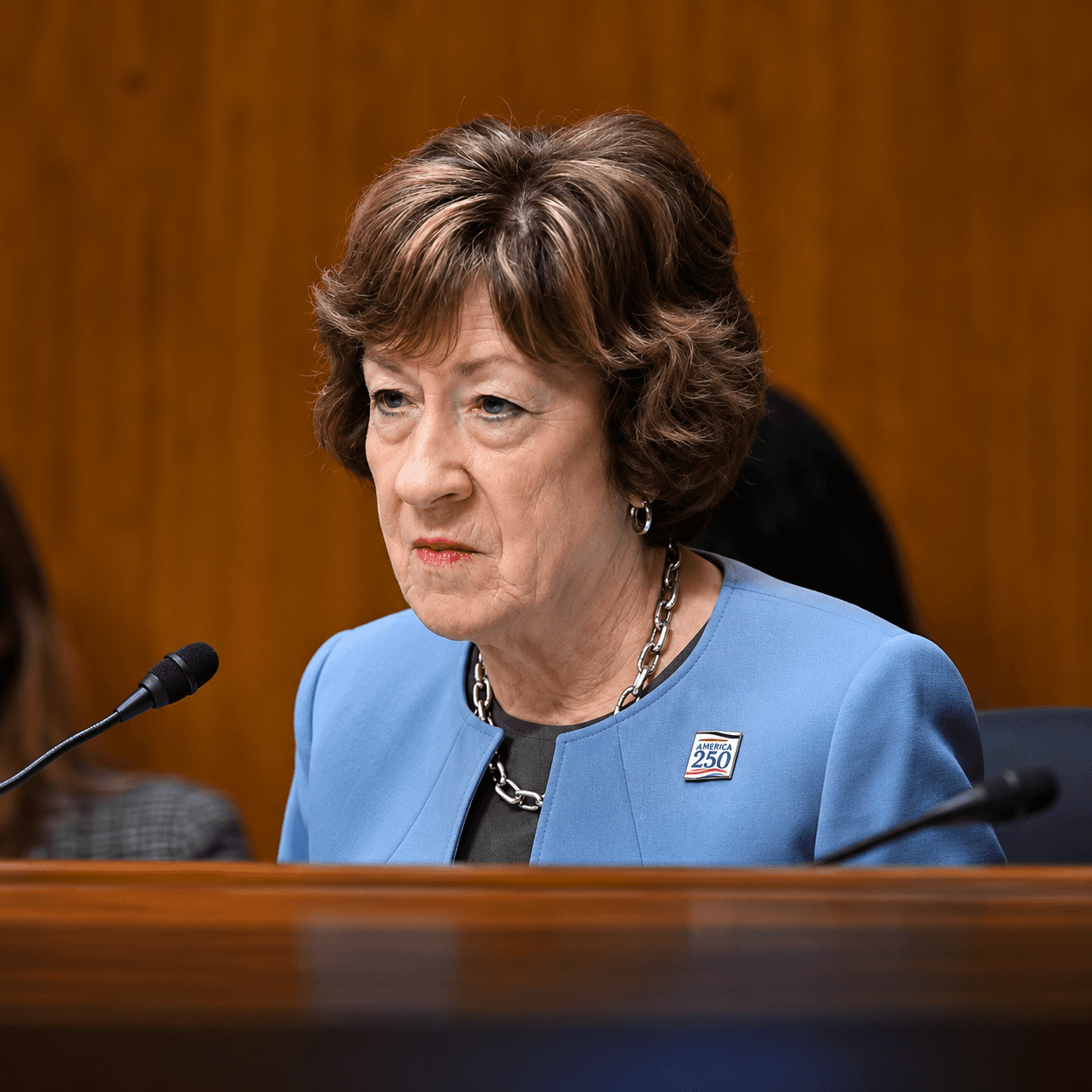
Maine has witnessed one of the biggest political upsets of the 2026 US midterm elections. Democrat Troy Jackson has defeated Republican Senator Susan Collins, ending her long career in Washington and handing Democrats a significant Senate victory.
Collins, who was first elected in 1996, had built a reputation as a tough and politically resilient Republican. Despite representing a state that has increasingly supported Democratic candidates in presidential elections, she repeatedly managed to hold on to her Senate seat.
This time, however, the political landscape shifted. Jackson, a former president of the Maine State Senate and a fifth-generation logger, built his campaign around the concerns of working-class families, rising living costs and criticism of Collins's voting record during President Donald Trump's administration. Collins conceded after the results showed Jackson with a clear lead.
A POLITICAL CAREER COMES TO AN END
Collins's defeat marks the end of a significant chapter in Maine's political history. Throughout her time in the Senate, she presented herself as a moderate Republican who was willing to work across party lines and fight for federal funding for her state.
She also served as chair of the Senate Appropriations Committee, giving her considerable influence over federal spending decisions. Her campaign repeatedly highlighted her experience and argued that her seniority in Washington helped Maine secure important resources.
Jackson, however, managed to challenge that message. He argued that Collins had become too closely aligned with Trump's political agenda and that her claims of independence did not always reflect her voting record on major national issues.
For many voters, the election became a choice between maintaining established political representation and bringing a fresh voice to Washington.
TROY JACKSON'S WORKING-CLASS CAMPAIGN
Jackson, 58, entered the Senate race after an unexpected turn in his political career. He had initially campaigned for the Democratic nomination for governor but finished third in the party's June primary.
His path to the Senate nomination opened in July when Graham Platner, the original Democratic candidate, withdrew following allegations of sexual assault and rape, which he denied. Jackson then stepped into the race with roughly 101 days to challenge a well-known incumbent.
A former logger from Allagash in northern Maine, Jackson made his working-class background a central part of his campaign. He focused on economic fairness, universal healthcare and reducing the influence of wealthy donors and powerful political interests.
He also attracted support from prominent progressive figures, including Senator Bernie Sanders.
Despite having considerably less time to campaign than Collins, Jackson connected with voters who were looking for a different direction. His victory demonstrated that a strong local message and a focus on everyday economic concerns could overcome an established political network.
ECONOMIC PRESSURES BECOME A CENTRAL ELECTION ISSUE
The rising cost of living played a major role in the election. For many families across Maine, particularly those in rural communities, higher fuel and heating costs have become a growing concern.
The war with Iran added further pressure by pushing energy prices higher. At the same time, trade tensions between the United States and Canada created uncertainty for industries that are important to Maine's economy, including tourism, logging and lobster fishing.
Jackson used these issues to argue that federal policies were failing to address the financial challenges ordinary residents face. He connected decisions made in Washington with the everyday struggles of families, workers and small businesses.
Collins defended her record, pointing to her experience and relationships in Washington as important advantages for the state. However, her message failed to secure enough support to overcome growing dissatisfaction with the economic and political climate.
ABORTION RIGHTS AND COLLINS'S RECORD
Abortion rights and the future direction of the US Supreme Court also became important campaign issues.
Jackson criticised Collins for supporting the confirmation of Justice Brett Kavanaugh. Kavanaugh later joined the Supreme Court majority in the decision that overturned the federal constitutional right to abortion established by Roe v. Wade.
Collins has described herself as supportive of abortion rights and defended her record on judicial appointments. However, Jackson's campaign argued that voters should focus on the consequences of her decisions rather than her public statements.
The issue added to broader questions about whether Collins's reputation as an independent Republican still reflected the views and priorities of Maine voters.
A MAJOR BOOST FOR DEMOCRATS IN THE SENATE
Jackson's victory carries significance far beyond Maine. Collins was one of the most prominent Republican senators facing a difficult re-election campaign, and her defeat gives Democrats an important Senate pickup.
The result is part of a wider Democratic breakthrough in the 2026 midterms, with the party also securing major victories in closely watched contests, including North Carolina.
These results have shifted control of the Senate and are expected to reshape the political balance in Washington when the new Congress takes office in January 2027.
For Republicans, losing a senator with Collins's experience and committee influence is a considerable setback. For Democrats, Jackson's victory strengthens their position as they prepare to take control of the chamber.
The change also raises questions about how the new Democratic majority will approach its legislative priorities and manage differences between moderate and progressive members.
RISKS AND KEY ISSUES TO WATCH
Transition of Senate influence: Maine will lose a senator with decades of experience and considerable committee influence. Jackson will need time to build relationships and establish his position in Washington.
Economic expectations: Voters will expect action on heating costs, fuel prices, healthcare and the challenges facing rural industries.
Party divisions: Jackson's progressive positions could create disagreements with more centrist members of the Democratic Party.
Federal funding: His ability to secure federal resources and protect Maine's economic interests will be closely compared with Collins's record.
Republican response: Collins's defeat could force Republicans to rethink their approach in states that lean Democratic but have continued to elect Republican senators.
WHAT TO WATCH NEXT
Senate transition: Jackson's preparations to take office and the priorities he plans to pursue during his first months.
Committee assignments: The committees he joins and how quickly he establishes influence on issues important to Maine.
Democratic leadership: How the party manages its new Senate majority while balancing progressive demands with broader legislative goals.
Collins's next move: Whether the outgoing senator makes further announcements about her political future.
Maine's policy agenda: Whether Jackson can turn his campaign promises on healthcare, affordability and working-class economic issues into meaningful action.
MAINE US SENATE ELECTION — RESULTS
Maine U.S. Senate, 2026
General Election | November 3 | Statewide
91.0% of expected votes counted
Troy D. Jackson — WINNER
Party: Democratic
Vote share: 53.4%
Total votes: 368,429
Susan M. Collins — Incumbent
Party: Republican
Vote share: 46.5%
Total votes: 320,926
Result called by the Associated Press. Updated November 5, 2026, at 05:05.
Source: Associated Press
FACT CHECK METER
Editorial confidence: 98%
Strongly supported — reported election result.
Confirmed details
Troy Jackson defeated incumbent Susan Collins in the Maine US Senate race.
Collins conceded the election.
Jackson previously served as president of the Maine State Senate.
The result represents a significant Democratic gain in the Senate.
Important distinctions
This was a US Senate election, not a Maine gubernatorial race.
Jackson became the Democratic nominee after Graham Platner withdrew.
The reported election result is separate from the final certification process.
AWX VERDICT
Susan Collins's defeat represents a major political turning point for Maine and a significant setback for Republicans. Jackson's victory highlights the importance of economic concerns, working-class issues and growing dissatisfaction with the country's political direction.
THE AWX BOTTOM LINE
Susan Collins's defeat brings one of the longest-running Republican Senate careers in modern Maine politics to a close. After nearly three decades in Washington, her loss shows that even well-established political figures can become vulnerable when economic pressures, national divisions and voter frustration come together.
For Democrats, the victory is about more than changing Maine's representation in Washington. It is another important step in their return to control of the US Senate.
For Troy Jackson, however, winning the election is only the beginning. He now faces the challenge of turning his campaign promises into practical results, particularly on healthcare, affordability and economic opportunities for working families.
ATTLAS NEWS | AWX WORLD NEWS
Real Stories. Lasting Impact.




Comments
No comments yet.