

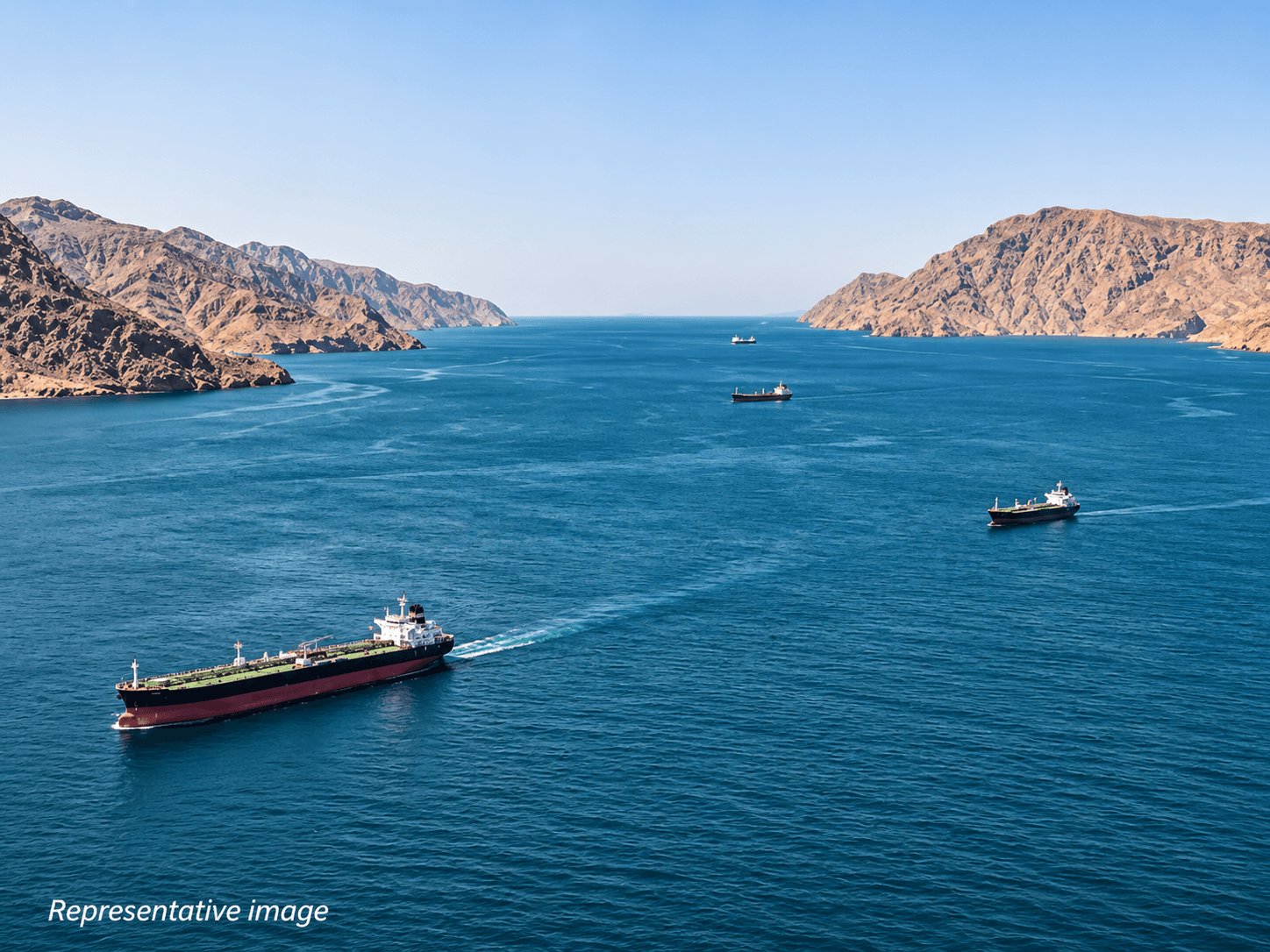
Oman's coastline is facing growing maritime security concerns following a series of incidents involving commercial vessels near the strategically important Strait of Hormuz. The attacks have raised fresh questions about the safety of international shipping as tensions across West Asia continue to threaten vital trade routes.
The most serious incident took place on November 2, when the commercial vessel MSV AL JUSUFI, carrying 14 Indian nationals, came under attack near Limah off Oman's northern coast. One crew member later died from his injuries, while the remaining 13 seafarers were rescued by Omani authorities.
Further incidents involving unidentified projectiles striking vessels in the same maritime area have added to the concern. The United Kingdom Maritime Trade Operations (UKMTO) issued fresh warnings, advising ships to remain alert and report any suspicious activity.
Although no official confirmation has established who was behind the attacks, the incidents highlight the growing risks for commercial vessels operating in the Gulf of Oman and around the Strait of Hormuz.
ONE INDIAN SEAFARER KILLED IN ATTACK NEAR LIMAH
The November 2 incident involved MSV AL JUSUFI, which was carrying 14 Indian nationals when it was attacked near the Omani coast. India's Ministry of External Affairs confirmed that 13 crew members were rescued, while one seafarer died from injuries sustained during the incident.
The deceased was identified as Gandhar Nahim Ajij, a sailor from Gujarat. Union Shipping Minister Sarbananda Sonowal expressed his condolences to the family and confirmed that the surviving crew members had been safely evacuated.
India strongly condemned the attack, calling for an immediate reduction in regional tensions. New Delhi also made it clear that commercial vessels and civilian infrastructure must not be caught up in the wider conflict.
Oman's Coast Guard and Royal Navy were involved in the rescue operation, demonstrating the importance of regional cooperation in responding to maritime emergencies.
FRESH PROJECTILE INCIDENTS ADD TO SHIPPING CONCERNS
The deadly attack was followed by further reports of security incidents near Limah, raising concerns about the safety of other commercial vessels operating in the area.
On November 2, UKMTO received a report from a vessel approximately nine nautical miles northeast of Limah. The ship's master said an unidentified projectile had struck the starboard side, leaving a hole in the vessel. Fortunately, all crew members were reported safe, and no environmental damage was recorded.
Another incident was reported on November 3, involving a tanker sailing around 14 nautical miles northeast of Limah. According to the vessel's company security officer, two unidentified projectiles struck the engine room. No casualties or environmental damage were reported.
Following these incidents, UKMTO advised commercial vessels to exercise caution and report suspicious activity while investigations continued.
The repeated strikes have raised concerns that ships operating along Oman's northern coastline could face further threats from unidentified aerial or projectile attacks.
INDIA CALLS FOR PROTECTION OF COMMERCIAL SHIPPING
India has strongly criticised attacks on commercial vessels and reiterated its demand for safe and uninterrupted maritime navigation.
The Ministry of External Affairs described the incidents as deeply concerning and called for immediate de-escalation. It also stressed the need for diplomatic efforts to prevent further instability across West Asia.
New Delhi has emphasised that international waterways must remain open to commercial traffic in accordance with international law. The safety of civilian crews, particularly Indian nationals working aboard merchant vessels, remains a major concern.
With thousands of Indian seafarers employed across international shipping routes, attacks on commercial vessels have become an increasingly sensitive issue for the country.
Indian diplomatic and maritime authorities are also working with their Omani counterparts to assist affected crew members and provide support to the family of the deceased sailor.
STRAIT OF HORMUZ REMAINS A MAJOR SECURITY FLASHPOINT
Oman's northern coastline is close to the Strait of Hormuz, one of the world's most important maritime trade and energy corridors.
The narrow waterway connects the Persian Gulf with the Gulf of Oman and the Arabian Sea. It carries a significant share of global oil and liquefied natural gas shipments, along with other essential commercial cargo.
Recent security incidents in and around the region have increased pressure on shipping companies, insurers and maritime monitoring agencies. Reports of projectile strikes and other threats during October and November have added to uncertainty for vessels using these routes.
Even isolated attacks can have wider consequences. Shipping companies may delay departures, change routes or introduce additional security measures to protect their crews and cargo.
For energy-importing countries such as India, prolonged disruption could mean higher transportation costs, increased insurance premiums and additional pressure on fuel prices.
SHIPPING COMPANIES FACE HIGHER RISKS AND INSURANCE COSTS
The latest incidents are creating fresh operational challenges for commercial shipping companies.
Operators moving goods through the Gulf must now account for the possibility of projectile attacks, vessel damage, crew injuries and unexpected delays. Insurance providers may also reassess the risks associated with routes close to the Strait of Hormuz.
Shipping companies are likely to pay closer attention to maritime security advisories, route assessments and updates from monitoring agencies before sending vessels through potentially dangerous waters.
UKMTO has urged ships to remain cautious and report suspicious activity. Its incident reports have become an important source of information for operators navigating the affected region.
The bigger concern is that repeated disruptions could make shipping through the Gulf more expensive and unpredictable, even for vessels that are not directly targeted.
REGIONAL TENSIONS RAISE FEARS OF FURTHER ESCALATION
The maritime incidents come at a time of heightened tensions involving Iran, the United States and other regional players. Military activity and growing security concerns around the Strait of Hormuz have created uncertainty for countries across the Gulf.
Oman has traditionally played an important diplomatic role in the region, maintaining communication channels and supporting efforts to reduce tensions between rival parties. The latest attacks have made regional cooperation and diplomatic engagement even more important.
However, available official reports have not identified those responsible for the incidents near Limah. It would therefore be premature to link the attacks to any particular country or armed group.
Regional governments now face a difficult challenge: protecting commercial shipping and civilian crews while preventing individual incidents from triggering a much wider military confrontation.
RISKS AND KEY ISSUES TO WATCH
Further attacks on commercial vessels: Additional projectile strikes could put more crews at risk and disrupt shipping operations.
Safety of Indian seafarers: Indian nationals working aboard merchant vessels may face continued security threats.
Disruption to the Strait of Hormuz: Further incidents could affect international oil, gas and cargo shipments.
Rising insurance costs: Shipping companies could face higher premiums and additional security expenses.
Environmental damage: A major attack on an oil tanker could lead to serious pollution or an oil spill.
Regional escalation: Unidentified attacks could increase tensions between countries already involved in the wider confrontation.
Diplomatic pressure: Oman, India and other regional governments may step up efforts to protect civilian shipping.
WHAT TO WATCH NEXT
UKMTO security updates: Further maritime warnings and incident reports around Limah and the Strait of Hormuz.
Omani investigations: Any official findings about the attacks and those responsible.
Crew safety and repatriation: Continued support for the surviving sailors and the family of the deceased Indian seafarer.
India's diplomatic response: Further discussions with Oman and other regional governments on maritime security.
Shipping route decisions: Whether commercial operators adjust schedules or avoid higher-risk waters.
Regional diplomatic efforts: Whether negotiations can ease military tensions and restore confidence in international shipping.
FACT CHECK METER
Editorial confidence: 99%
Confirmed details
MSV AL JUSUFI was attacked near Limah on November 2.
One Indian seafarer died, while 13 crew members were rescued.
UKMTO reported separate projectile incidents near Limah on November 2 and 3.
India condemned the attack and called for safe maritime navigation.
UKMTO advised vessels to exercise caution while operating in the affected waters.
Important distinctions
The individuals or groups responsible for the attacks have not been officially identified in the available reports.
No casualties were reported in the separate tanker projectile incident.
Increased maritime security concerns do not necessarily mean Oman has declared a formal nationwide high-alert status.
AWX VERDICT
The attacks and the resulting loss of life are supported by official and independent reporting. The repeated incidents point to a serious maritime security concern, although responsibility for the attacks and the risk of further incidents remain uncertain.
The percentage represents AWX's editorial confidence in the factual reporting presented in this article. It is not a statistical probability or an official rating.
THE AWX BOTTOM LINE
The attacks near Oman's coastline have brought renewed attention to the growing dangers facing commercial shipping in one of the world's most important maritime regions.
The death of an Indian seafarer is a tragic reminder of the human cost of the wider West Asian conflict. Meanwhile, additional projectile strikes near Limah have raised fresh questions about the safety of vessels travelling through the Gulf of Oman and the Strait of Hormuz.
For Oman, India and other regional governments, protecting civilian crews and keeping international trade routes open will remain urgent priorities.
The coming days will be important in determining whether these incidents remain isolated or point to a wider deterioration in maritime security across the Gulf.
ATTLAS NEWS | AWX WORLD NEWS
Real Stories. Lasting Impact.



Comments
No comments yet.